
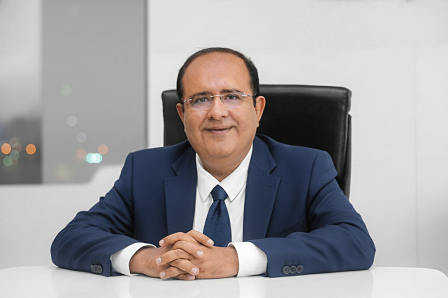
Speaking at the 56th Annual Convention of the Federation of Hotel & Restaurant Associations of India (FHRAI) in Varanasi, Vikram Lalvani, Managing Director & CEO of Sterling Holiday Resorts Limited, outlined a simple yet powerful philosophy for scaling hospitality brands without sacrificing authenticity:
“Standardise the invisible. Localise the visible.”
Against the evocative backdrop of Varanasi-where spirituality, heritage, cuisine and culture are deeply intertwined with the visitor experience-Lalvani explored how India’s next generation of hospitality brands can achieve operational scale while remaining rooted in the distinctive character of each destination.
Building a Scaled Leisure Hospitality Company
For Sterling, this philosophy is more than a brand strategy. It reflects the company’s own transformation and evolving ambitions.
Once primarily associated with vacation ownership, Sterling has evolved into a scaled, leisure-led hospitality company with a growing presence across established holiday destinations, emerging leisure markets and cities where leisure increasingly intersects with business and other travel occasions.
“We are building Sterling into a scaled hospitality ecosystem-one that spans destinations, travel occasions and experiences, and serves the Indian traveller wherever and however they choose to travel. We are proud to be part of the Fairfax family, but our growth is sustained by the strength of our own business. The balance sheet we have built has been earned through years of disciplined strategy, operational execution and prudent financial management.”
Lalvani emphasised that growth in hospitality can no longer be measured simply by the number of destinations or properties added to a portfolio.
“Our objective is to broaden the occasions on which guests choose Sterling.”
This approach is reflected in Sterling’s expansion into destinations such as Dehradun, Karwar, Mohali, Madurai and Bokaro, alongside its exploration of emerging leisure markets including Sattal and Jagdalpur.
Becoming Destination Architects
According to Lalvani, one of Sterling’s key strengths lies in recognising the potential of destinations long before they emerge as obvious hospitality markets.
The company’s early presence in destinations such as Ooty and Darjeeling, among several locations that have since evolved into prominent tourism markets, combined with its continued expansion into newer destinations, reflects a strategy focused on long-term destination potential rather than simply following established hotel development patterns.
“We tend to enter destinations where others hesitate to enter. We are not simply expanding hotels—we are helping expand destination ecosystems.”
This philosophy positions Sterling as more than an operator of hotels and resorts. The company sees itself as a destination architect, helping create networks of experiences that encourage travellers to explore India in deeper and more meaningful ways.
The Future of Brand Equity
Lalvani also highlighted the need for hospitality brands to think beyond individual properties and focus on the broader experiences surrounding them.
“A hotel or resort is like the road. The destination is the content.”
For Sterling, cuisine, wellness, nature, heritage and culture should not simply remain supplementary elements of a stay. Instead, these experiences need to be developed into clearly defined and distinctive products that enrich the traveller’s journey across the company’s growing network.
The philosophy can be summarised simply:
Standardise the invisible-operating processes, safety, hygiene, service standards, revenue management and quality controls.
Localise the visible-architecture, cuisine, storytelling and experiences that reflect and preserve the character of each destination.
Technology as the Orchestration Layer
Lalvani described technology-particularly Artificial Intelligence-not as a replacement for human hospitality, but as the invisible engine that enables hospitality brands to deliver better experiences at scale.
Sterling is already deploying AI across several backend functions, including AI-assisted income audits designed to identify operational exceptions. The company is also expanding the use of connected data and decision intelligence to better understand guest preferences and intent, enabling greater personalisation across the guest journey.
“AI should manage complexity so that people can focus on judgement. The stronger the invisible machinery becomes, the more meaningful the guest experience becomes.”
Sterling’s Next Chapter
Looking ahead, Lalvani said Sterling’s next phase of growth will be driven by four interconnected capabilities :
A trusted national brand ,A growing network of differentiated destinations ,Productised local experiences, and Technology-enabled operational excellence
He concluded by returning to the philosophy that underpins Sterling’s approach to growth:
“Standardise the invisible. Localise the visible. Create meaningful journeys, and use technology as the orchestration layer that scales them. That is how hospitality brands build lasting differentiation.”
As India’s hospitality industry enters a new phase of expansion, the challenge for brands will be to grow without becoming generic. Sterling’s approach offers a compelling answer: build strong systems behind the scenes, while ensuring that what guests see, taste, experience and remember remains unmistakably local.
Also Read
India’s Spiritual Tourism on the Rise reports Cleartrip’s PeekABoo Trends Tracker
Watch on Youtube
