
By Ravisankar KV
Have you ever walked through a coffee plantation in the early morning hours? Have you ever seen how a coffee bean arrives in your cup after passing through a civet cat? Have you ever imagined a godown keeper in Kozhikode who forgot to shut his window, leaving sacks of coffee meant for Europe, waiting to sail on a Beypore uru, to be soaked by the monsoon rain? That careless moment became one of the great accidental discoveries in coffee: Monsooned Malabar.
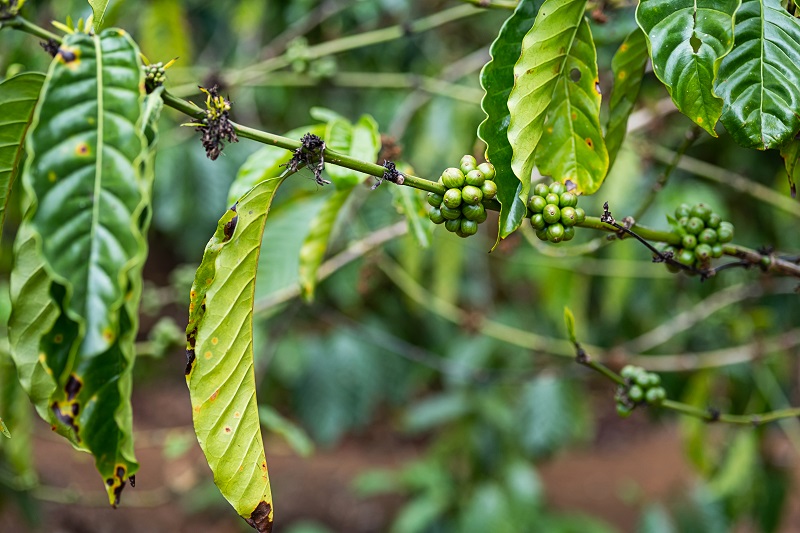
On October 1, 2026, the world marks its first United Nations-recognised International Coffee Day. There is no better morning to listen to what India’s coffee estates have been saying for four hundred years.
The saint and the seven seeds
The story, as it is told in the hills of Karnataka, begins with a wandering Sufi saint and an act of quiet defiance. In the seventeenth century, Arabia guarded its coffee as jealously as a kingdom guards its crown jewels. Beans were exported only after roasting, so that no foreign soil could grow what Arabia alone possessed. But on a pilgrimage to Mecca, Baba Budan tasted something in Mocha, Yemen, that he could not leave behind. Legend says he strapped seven raw, fertile seeds across his chest, hidden perhaps in the folds of his beard. He planted them on the slopes of the Chandragiri Hills, a range that now carries his name, Bababudangiri. They became the first roots of an industry that would one day shade entire mountainsides across the Western Ghats.
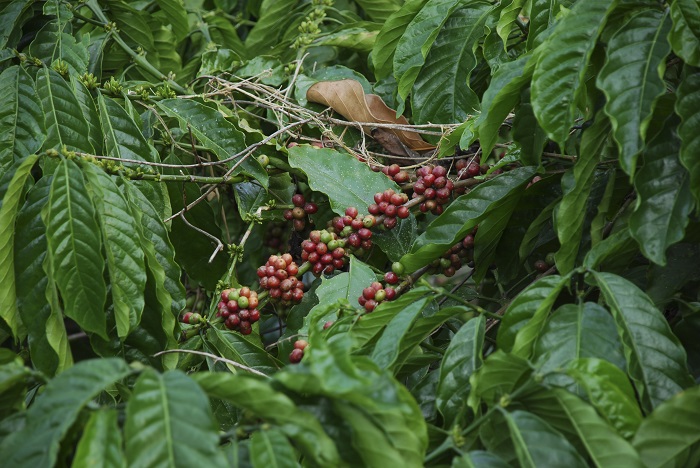
I understood the weight of that gesture when I walked through the mist-clad coffee plantation of Old Kent Estate in Coorg. Under a canopy of native shade trees, with the cold air resting on my shoulders, I realised how one man’s act had changed the landscape of Chikmagalur and Coorg for centuries. The reward of that act is that Arab travellers now enquire eagerly whether the experience they had in Coorg can be repeated next season.
A morning with the coffee
That morning, Mr. Abraham Philip, a passionate hospitality professional, led us through the early-morning chill of Coorg. He explained how civet coffee, the famed luwak, is made when the Asian Palm Civet eats the ripest cherries and its enzymes quietly reshape the bean within. He told us about the accidental birth of Monsooned Malabar and about many other varieties. Each of them belongs to the world of millions of coffee lovers across the globe.
The monsoon story deserves its own telling. In the age of sail, green beans travelling from India to Europe spent months in the humid sea winds. They swelled, paled to a soft golden yellow, and lost their sharp acidity. What began as an accident became a deliberate art. Today Monsooned Malabar AA is recreated with intention in the warehouses of the Malabar coast, where raw beans are laid open to the monsoon winds for three to four months. The result is a mellow, velvety cup with notes of wood and spice, and one of India’s most distinctive Geographical Indication coffees. Civet coffee, produced in small quantities each year in the estates of Coorg and Chikmagalur, is smooth and deep in caramel and cocoa. It is coffee touched twice by nature before it ever touches a cup.
Three landscapes, three voices
Coorg (Kodagu) is India’s coffee capital. High-altitude Arabica and Robusta grow intercropped with pepper and cardamom, giving the cup a mild, spiced warmth that tastes faintly of the forest. Wayanad, across the Kerala border, speaks in a bolder register: lowland Robusta from spice forests, earthy and heavy with chocolate and crema. Chikmagalur, where the seven seeds first touched Indian soil, offers bright, floral, citrus-laced Arabica.
Together they explain why Karnataka alone produces well over two lakh tonnes of coffee a year. They also explain why India is counted among the world’s great shade-grown coffee nations, growing nearly all its coffee under a two-tiered canopy of native trees, a method as old as Baba Budan’s hermitage and as modern as today’s climate consciousness.
Coorg: the new luxury destination
Coorg has become one of the world’s new luxury experiential destinations, and serious travellers are noticing. They come to explore and experience coffee culture, and the resorts here each offer the guest a different feeling. Among them are Taj Coorg, Coorg Wilderness, Evolve Back Coorg, Tamara Coorg, The Leela Coorg Coffee Sanctuary, Old Kent Coorg, The Radisson Coorg and Ibni Coorg. Few other places in India let a traveller wake up inside hundreds of acres of coffee plantation, with that vastness of green around every resort.
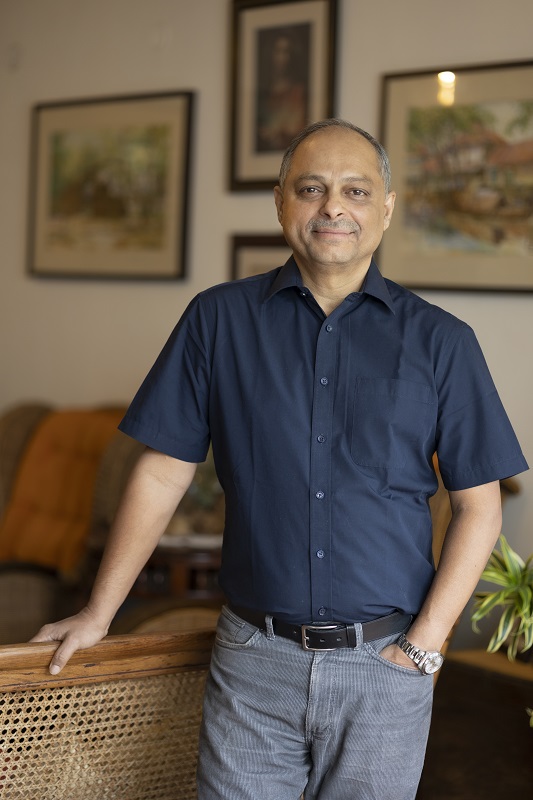
Jose T. Ramapuram, Executive Director Marketing at Evolve Back Resorts, puts it best: “Coffee is one of those rare things that can tell you a great deal about a place before you have even begun to explore it. The soil, the climate, the altitude, the way it is grown, harvested, and prepared, and the people who have worked with it over generations all find their way into the cup. That is what makes coffee such an important part of the experience in a place like Coorg. I like to think that the soil feeds the land’s stories into every bean. For someone who has only known coffee as something that arrives in a cup, seeing where it comes from can completely change the way they experience it. At our resort in Coorg, we try to create that moment of discovery for our guests. They can walk through a working coffee and spice plantation, see where the journey begins, and understand what goes into producing a good cup. Through our Coffeeology sessions, we take that experience a step further, bringing guests into the art and science of coffee and letting them taste and explore different preparations. For me, that is the real value of coffee in hospitality. It gives us a very simple and accessible way to connect people with the landscape, its people, and its culture. You may arrive knowing very little about coffee, but leave with a different appreciation for what is behind that morning cup. A cup of coffee can be a beverage, but it can also be a story about the place it comes from.”
The circle closes
Centuries ago a pilgrim carried coffee from Arabia to India. Today the flow runs the other way. Gulf travellers from Saudi Arabia, the UAE, Oman and Qatar are arriving in growing numbers to walk the hills Baba Budan once seeded. High-value Gulf arrivals to these coffee belts have been climbing steadily, nurtured by initiatives like Indo-Arab Connect and a growing appetite for wellness, heritage and landscapes that reward slowness. Coffee is no longer just a crop India grows. It is a bridge India uses to welcome its guests.
If you are a serious experience seeker, do not miss the luxury resorts of Coorg, especially if you are a coffee lover and a nature lover. Sip your Coorg coffee as the whistling of the Nilgiri laughing thrush or the Malabar whistling thrush drifts through the mist. It will turn your morning mood into a quiet benediction.
This year’s International Coffee Day carries the theme “Coffee is Part of the Solution,” honouring the 12.5 million farming families whose lives are stitched into this harvest. India’s story began with seven seeds, a saint’s daring and a mountain range willing to receive them. So today, when the cup reaches your hands, let it arrive as it was always meant to: a small, steaming inheritance of pilgrimage and patience, of soil and story, carried across four centuries to meet you exactly where you are.
“Every cup of coffee carries a journey – from the hands that nurture the bean to the people and places that give it character. On International Coffee Day 2026, let us celebrate not only the coffee we drink, but the farmers, cultures, landscapes and communities behind every cup.”
International Coffee Day 2026: Why It Matters
On 10 March 2026, the UN General Assembly adopted Resolution A/RES/80/248, designating 1 October as International Coffee Day. The resolution recognises coffee’s cultural, social and historical significance, along with its contribution to livelihoods, food security and economic development.
The 2026 campaign of the International Coffee Organization (ICO) carries the message “Coffee is Part of the Solution.” It focuses on the role of coffee in sustainable socio-economic development and in the livelihoods of approximately 12.5 million farming families worldwide.
The FAO’s inaugural 2026 celebration offers a complementary theme: “Celebrating Coffee, Honouring the People Behind Every Cup.” Its Geneva programme highlights coffee’s economic, social, environmental and cultural importance, and the contribution of farmers, workers, communities and others across the coffee value chain.
For India, the occasion is particularly meaningful. Coffee is not merely an agricultural commodity here. It is part of the history of the Western Ghats, the identity of Coorg, Chikmagalur and Wayanad, and the character of South Indian households. It is also part of the growth of specialty cafés and an increasingly important tourism experience.
