
Over the past ten years, Telangana has undergone a gradual but significant transformation in its tourism landscape, moving from basic nature-focused projects to comprehensive destination development spanning heritage conservation, spiritual tourism, and experiential travel.
An analysis of Union government funding patterns reveals how the state has progressively expanded its presence in national tourism frameworks, with investments growing both in scale and sophistication since the mid-2010s.
Early Foundations: Nature and Community Tourism
The state’s journey with centrally-funded tourism initiatives began nearly a decade ago with a nature-based project in Mahbubnagar district, sanctioned for approximately ₹92 crore under the Swadesh Darshan program. This initial investment focused on developing ecotourism infrastructure and established Telangana’s credentials within national tourism planning.
The following year saw attention shift toward indigenous culture, with nearly ₹80 crore allocated for developing tourism around tribal areas and natural attractions including Mulugu, Laknavaram, Tadvai and Bogatha waterfalls. Though the funding amount decreased marginally, the thematic scope broadened to encompass community-based tourism and tribal heritage.
Heritage Takes Center Stage
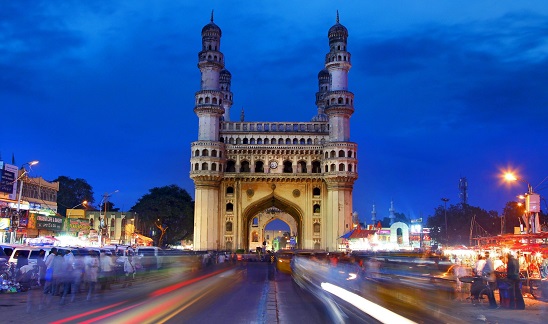
A significant reorientation occurred in 2017-18 when close to ₹97 crore was approved for developing a heritage corridor connecting the Qutb Shahi Heritage Park, Paigah Tombs, and Hayat Bakshi Mosque.
“The emphasis shifted toward monument preservation, visitor amenities and urban tourism infrastructure, establishing Hyderabad’s credentials as a significant heritage destination,” noted a former tourism department official familiar with the projects.
This marked a departure from the rural and nature-focused approach of earlier years toward urban cultural tourism.
Pilgrimage Tourism Emerges
After a brief hiatus, 2020-21 brought a new dimension when Telangana received approval under the PRASHAD (Pilgrimage Rejuvenation and Spiritual Heritage Augmentation Drive) scheme. Nearly ₹39 crore was sanctioned for enhancing facilities at the Jogulamba Devi Temple in Alampur, introducing religious tourism as a strategic focus area with emphasis on pilgrim infrastructure and spiritual site development.
Momentum Builds: UNESCO Recognition and Diversification
Funding accelerated significantly in 2022-23 with dual approvals totaling over ₹103 crore – ₹62 crore for infrastructure development at the UNESCO World Heritage-listed Ramappa Temple and approximately ₹41 crore for improving pilgrimage amenities at Bhadrachalam.
Jayesh Ranjan, Special Chief Secretary for Youth Advancement, Tourism and Culture, emphasized the strategic value of these investments. “Initiatives at sites like Ramappa Temple and Bhongir Fort have enhanced Telangana’s international recognition, while wellness-oriented and digital projects signal a forward-looking approach to tourism development,” he explained.
2024-25: A Watershed Year
The most recent fiscal year represented a decisive turning point, with Telangana securing approvals exceeding ₹280 crore across multiple central schemes including PRASHAD, Swadesh Darshan 2.0, Challenge-Based Destination Development, and SASCI.
This comprehensive package encompasses diverse projects: an experiential zone at Bhongir Fort, ecotourism infrastructure at Ananthagiri, a digital experience center at Buddhavanam, a sustainable tourism circuit around the Ramappa region, and a wellness and spiritual retreat at Somasila.
Notably, the funding secured in this single year surpassed the combined allocations received during the initial five years of the state’s engagement with central tourism schemes.

A Clear Trajectory
The progression illustrates a strategic evolution from basic circuit development to integrated, technology-enhanced destinations incorporating wellness, spirituality, heritage conservation, and experiential tourism. The funding trajectory reflects not just quantitative growth but a qualitative shift in how Telangana positions itself within India’s tourism ecosystem.
From modest beginnings focused on natural landscapes and tribal culture, the state has systematically built a diversified portfolio that leverages its historical monuments, religious sites, ecological assets, and emerging capabilities in digital tourism experiences.
This decade-long transformation, supported by increasing federal investment and strategic project selection, has repositioned Telangana from a peripheral player to an increasingly prominent participant in national tourism development-a journey that appears poised to continue as new projects reach completion in the coming years.
Also Read
Andhra Pradesh to Launch Avakai Festival
Watch on Youtube
