
By Raajgopaal Iyer, CEO, UDS Hotels & Resorts

For decades, the hotel minibar symbolized quiet luxury – a small, humming cabinet of late-night indulgence tucked into the corner of a room. Today, it is more often a dusty relic or a hollowed-out fridge bearing a laminated price list nobody reads. Many dismiss its decline as an inevitable casualty of the digital age. I believe we are witnessing something far more significant: a fundamental failure of hospitality imagination.
We should not simply let the minibar die. We should mourn what it once represented – a gesture of genuine care – and ask ourselves, with far greater urgency than the industry currently does, what it could become.
In markets like the UAE, where delivery infrastructure is arguably the most sophisticated in the world, the minibar’s original proposition – immediacy – has simply evaporated. Why pay a 400% markup for a lukewarm soda when a delivery rider can bring a gourmet meal and a cold craft brew to the lobby in under twenty minutes?
The Delivery App Dilemma
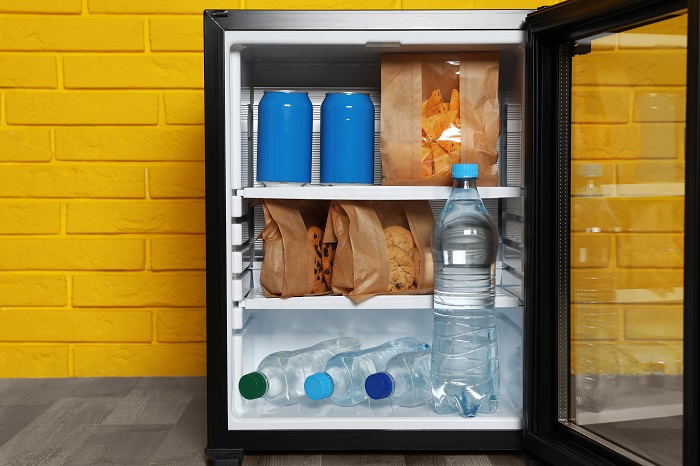
The economics are inescapable. But the hidden cost of this efficiency is rarely discussed honestly within our industry.
When a guest is compelled to look outside the hotel to feel looked after, the hotel has quietly abdicated its primary mission. There is a meaningful distinction between convenience and anticipation. A delivery app responds to a demand that has already been felt and articulated. True hospitality anticipates a need before the guest has even formed the thought. By outsourcing the snack drawer to a third-party algorithm, hotels are surrendering one of the most intimate touchpoints in the entire guest journey.
The Missing Middle Ground
The industry has retreated to two extremes, and neither serves the majority of guests well.
At one end, ultra-luxury properties – the Rosewoods, the Château Voltaires of the world – have transformed the minibar into an artisanal showcase: a curated cabinet of local craft beverages, regional confections, and house-made preserves. It is, at its finest, genuinely extraordinary. At the other end, mid-range hotels have either gutted the fridge entirely or left behind an overpriced and apologetic selection of global brands that no one needed to travel to find.
What has vanished entirely is the thoughtful middle: the competent, fairly priced, locally considered selection that communicates to a guest that someone actually thought about them. We have traded a gesture of welcome for a transactional price list, and our guests have noticed.
Transaction Versus Meaning

Consider why guests occasionally take a beautifully designed soap or a carefully chosen amenity home from a fine hotel. They do not feel like thieves. They feel like they are keeping a gift – something that was selected with them in mind, even in a small way.
The minibar lost its soul the moment it became purely an exercise in margin management. The shift that is required is not operational. It is philosophical. We must move away from commerce and back towards hospitality.
The old model was built on overpriced global brands, sensor-triggered automated billing, generic plastic bottles, and a race to compete on speed and restocking efficiency. The new model – the meaningful one – is built on local and regional products, a curated basket philosophy, fresh and seasonally considered choices, and a willingness to compete not on speed but on discovery, story, and the quiet pleasure of finding something unexpected and genuinely good.
The Path Forward: Curation Over Convenience
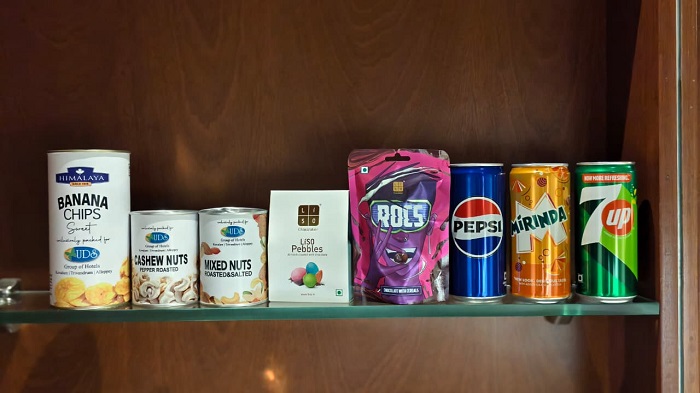
The solution is not to stock more familiar confectionery or to accelerate the restocking cycle. It is to lean, wholeheartedly, into locality and intention.
Imagine opening a minibar and finding a craft soda produced in a nearby neighbourhood, dates sourced from a local farm, a regional sweet that does not exist in any supermarket, or a small-batch preserve made by an artisan whose name is printed on the label. Fewer items. Better items. Priced at a level that communicates respect rather than contempt for the guest who is paying to be there.
In an era when anything can be ordered from a screen and delivered to a doorstep in minutes, the most valuable thing a hotel can offer is taste – not merely in flavour, but in the quality and thoughtfulness of its choices. The delivery platforms have won the convenience game, and there is no point contesting it on their terms.
The game worth playing – the one they cannot replicate – is the game of genuine care. It is time we started playing it again.
Rajgopaal Iyer is Chief Executive Officer of UDS Hotels & Resorts.
Also Read
Travel & Tourism Emerges as the World’s Fastest Growing Sector
Watch on Youtube
Follow us on YouTube Facebook Twitter
