
Analysis | April 2026 | Ravisankar K.V.
A Moment of Cautious Optimism
The announcement of a two-week ceasefire between the United States and Iran has injected genuine, if carefully calibrated, optimism into India’s inbound and domestic tourism sectors – arriving at precisely the right moment. With the Indian summer holiday season beginning at the end of April, followed by the beloved Monsoon Holiday season, the industry stands at a pivotal juncture: one where structural challenges are real, but where the opportunity for a bold, accelerated recovery is equally real.
The most compelling answer to the current moment is not to wait for long-haul conditions to normalise. It is to recognise – with clarity and confidence – that India’s short-haul and drive-in tourism assets are not contingency options. They are world-class propositions in their own right, and this is their moment.
Understanding the Landscape
The scale of the geopolitical disruption to global aviation and tourism has been significant. Industry estimates place losses at over twelve billion dollars within the first twenty days of conflict escalation, with jet fuel costs surging and thousands of routes disrupted across Asia, Europe, and the Middle East. The projected full-year impact on global tourism runs into the tens of billions.
India felt this acutely – through higher airfares, disrupted connectivity at Middle Eastern hubs, and a temporary decline in high-spending GCC arrivals. Domestically, aviation turbine fuel price increases were passed on to passengers, compressing affordability on key routes and briefly dimming the promise of accessible air travel that schemes like UDAN had worked hard to deliver.
Yet viewed analytically, these pressures are creating precisely the market conditions under which short-haul international travel and drive-in domestic tourism have historically flourished – and under which India, uniquely, is positioned to lead.
The ceasefire, even provisionally, changes the trajectory. GCC travellers – mobile, high-spending, and discerning – are actively seeking safe, familiar, and experientially rich alternatives. India offers all three. Recovery may take between three and eighteen months to fully normalise, but the direction, for those who move with purpose, is unmistakably positive.
The Short-Haul Advantage: A Geography Built for This Moment
Few countries in the world enjoy a short-haul travel geography as compelling as India’s. Within a four-hour flight radius sit Sri Lanka, the Maldives, Nepal, Bhutan, Thailand, Malaysia, and Singapore – a constellation of destinations encompassing pristine beaches, mountain kingdoms, ancient civilisations, modern city-states, and some of the world’s most distinctive culinary and cultural experiences. Critically, nearly all are accessible via a single direct flight with no Gulf hub dependency – a structural advantage that has never mattered more than it does today.

Sri Lanka deserves particular attention. Having navigated its own economic challenges with remarkable national resilience, the island is actively rebuilding its tourism infrastructure with India as a priority market. For travellers from Chennai, Kochi, Thiruvananthapuram, Trichy, and Bengaluru, Colombo is closer than many domestic hill stations reachable by road. The combination of cultural immersion, visual drama across Galle, Kandy, Sigiriya, and the Nuwara Eliya tea highlands, direct flight availability, and a favourable exchange rate makes Sri Lanka one of the most compelling value propositions in the current market – and one that the Indian travel trade should be packaging and promoting with urgency.
Bhutan and Nepal offer a different but equally powerful draw. Bhutan’s intentional high-value, low-volume model – anchored by its Sustainable Development Fee – actually aligns well with current market realities, attracting quality travellers willing to spend meaningfully. Nepal’s positioning as an adventure, trekking, and wellness destination draws hikers, spiritual seekers, and culture enthusiasts alike. Charter connectivity pioneered by operators like Thomas Cook and SOTC from Bengaluru and Ahmedabad has made both destinations considerably more accessible than their Himalayan mystique might suggest.
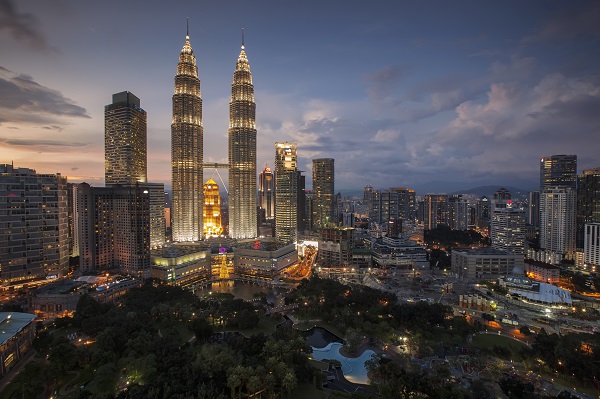
Malaysia and Singapore benefit from excellent Air India, IndiGo, AirAsia, Scoot, Silk Air, Batik Air, and Malaysia Airlines connectivity, minimal visa friction, well-established Indian dining infrastructure, and an urban-meets-nature holiday blend that appeals powerfully across age groups and travel styles. Singapore’s combination of family attractions, world-class safety, and cleanliness make it a particularly resilient choice as high airfares on long-haul routes redirect family travel decisions.
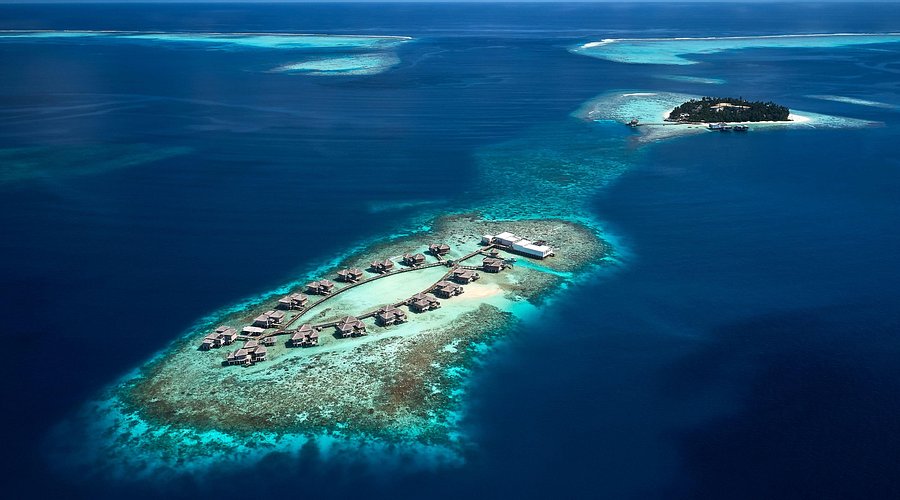
The Maldives, often perceived as exclusively ultra-luxury territory, is more accessible than its reputation implies – particularly from coastal Indian cities. Flight times of under one hour from Kochi and Thiruvananthapuram to Malé and Hanimadhoo have made the Maldives a genuine short-haul option. The expansion of guest house tourism and mid-market island options beyond the luxury resort circuit has opened the destination to a meaningfully wider traveller demographic – one that the Indian travel trade is well-positioned to serve.
The commercial opportunity for India’s travel trade is clear and immediate. The product exists. The destinations are trusted. The connectivity, while not untouched by current conditions, is structurally more resilient than long-haul alternatives. What is needed now is confident, creative re-packaging – value-optimised itineraries, negotiated group rates, bundled accommodation and experience products – and communication that positions the short-haul proposition on its own considerable merits.
The Drive-In Holiday: India’s Most Underutilised Tourism Asset
If short-haul international travel is tourism’s immediate pivot, the drive-in staycation is its deeper, more durable opportunity – and one that India is positioned to capitalise on like never before.
India’s road infrastructure transformation over the past decade is, by honest assessment, extraordinary. The National Highway network has expanded dramatically. Travel times between major metros and their leisure hinterlands have compressed significantly. The quality of the driving experience – particularly on expressways and newly developed mountain routes – has elevated road travel from a functional necessity to, for many travellers, an actively enjoyable part of the holiday itself.
The hospitality landscape within driving distance of every major metro has simultaneously exploded in diversity and quality. Boutique properties, farm stays, luxury eco-lodges, wellness retreats, and heritage homestays now populate destinations that a decade ago were served only by ageing government guesthouses. From the coffee estates of Chikkamagaluru and Coorg, to the backwater villas of Kerala, from the palace hotels of Rajasthan’s smaller towns to the agritourism properties of Maharashtra’s wine country – the drive-to destination inventory available to Indian travellers has never been richer.
The economics are equally compelling. Fuel costs for a family road trip remain dramatically lower than equivalent airfares for a family of four, even at current fuel prices. The elimination of airport procedures – queues, security, baggage restrictions, and the general stress of air travel with young children or elderly family members – is a genuine quality-of-life benefit that more travellers are consciously beginning to value. The flexibility of road travel – the freedom to stop, explore, and adapt without penalty fees – is something no airline ticket can replicate.

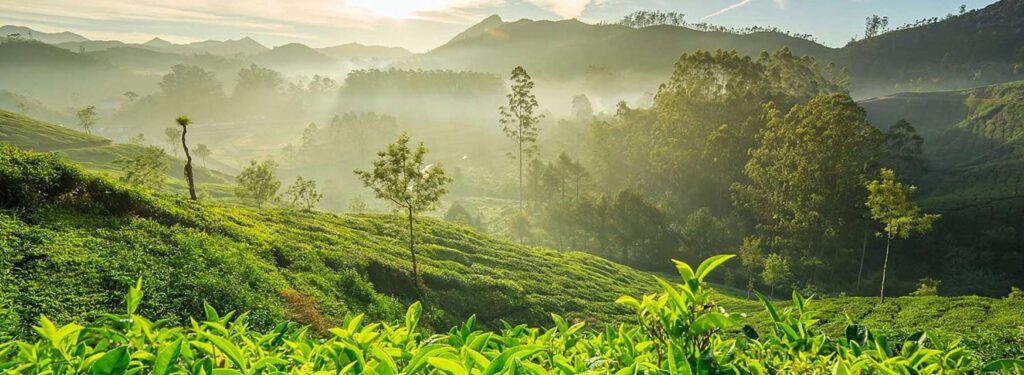
For Kerala, the drive-in staycation opportunity is particularly powerful. The Western Ghats hinterland – Munnar, Wayanad, Thekkady, Vagamon, and Nelliampathi – sits within three to eight hours of Chennai, Bengaluru, Coimbatore, Salem, Madurai, Trichy, Mangaluru, Kochi, Kozhikode, and Thiruvananthapuram. The backwater circuits of Kumarakom, Alappuzha, and Kollam are genuinely world-class experiences requiring no airport, no airline ticket, and no currency conversion. The spice villages and plantation stays of Idukki district offer an immersive encounter with Kerala’s landscape and culture that no resort in Thailand or the Maldives can authentically replicate. This is a ready-made staycation ecosystem of exceptional quality – one that is currently undermarketed relative to what it genuinely offers.
The same argument applies with equal analytical force across India’s major drive-to corridors: Mumbai to the Konkan coast, Lonavala, Mahabaleshwar, and Nashik’s wine country; Delhi to Uttarakhand’s Himalayan foothills and Rajasthan’s lake towns; Bengaluru to Coorg, Mysuru, Chikamagalur, Hampi, and Sakleshpur; Hyderabad to Araku Valley and the Deccan heritage circuit; Chennai to Pondicherry, Mahabalipuram, and the Nilgiri foothills. In each case, the product is largely complete – what it needs is aggressive promotion, quality packaging, and pricing architectures that affirm the staycation as a premium experience in its own right.
The Industry’s Immediate Agenda
The current disruption is, as all disruptions eventually prove to be, simultaneously a challenge and a structural opportunity. The organisations that move decisively now – reconfiguring products, redirecting marketing budgets, and re-educating the market will find a traveller base that is genuinely receptive and actively looking for compelling alternatives.
Several actions are immediately actionable. Tour operators should be building short-haul packages with bundled land and accommodation components that insulate travellers from airfare volatility. Hotel groups in drive-to destinations should be launching midweek and weekend packages priced to compete transparently with the total cost of a domestic flight holiday. State tourism boards – particularly those with strong drive-to products and large urban feeder markets – should be redirecting meaningful marketing investment toward domestic corridor promotion. Airlines on short-haul routes should be partnering with the trade on inclusive fare packages that reduce booking uncertainty and encourage advance commitment.
Above all, the industry must resist the impulse to position short-haul and drive-in travel as second-tier alternatives to something better. They are not. A long weekend in a coffee estate in Chikkamagaluru or Coorg is not a lesser version of a week in Phuket – it is a different, and in many respects richer, experience. A road journey through Kerala’s highlands is not a substitute for Bhutan – but for a family that makes it several times a year, it builds a relationship with landscape, culture, and memory that no single long-haul holiday can replicate.
The World Within a Tank of Fuel
The world beyond India’s long-haul flight paths is navigating genuine turbulence. But the world accessible within a short flight or a comfortable drive is, at this moment, extraordinary in its diversity, quality, and readiness to welcome Indian travellers.
The travel industry’s task – and its genuine opportunity – is to help more travellers discover this for themselves. To do so with confidence, creativity, and commercial seriousness. And to do so now, before the window that the current disruption has opened begins to close.
The short road to recovery, it turns out, may be the most rewarding road of all.
