
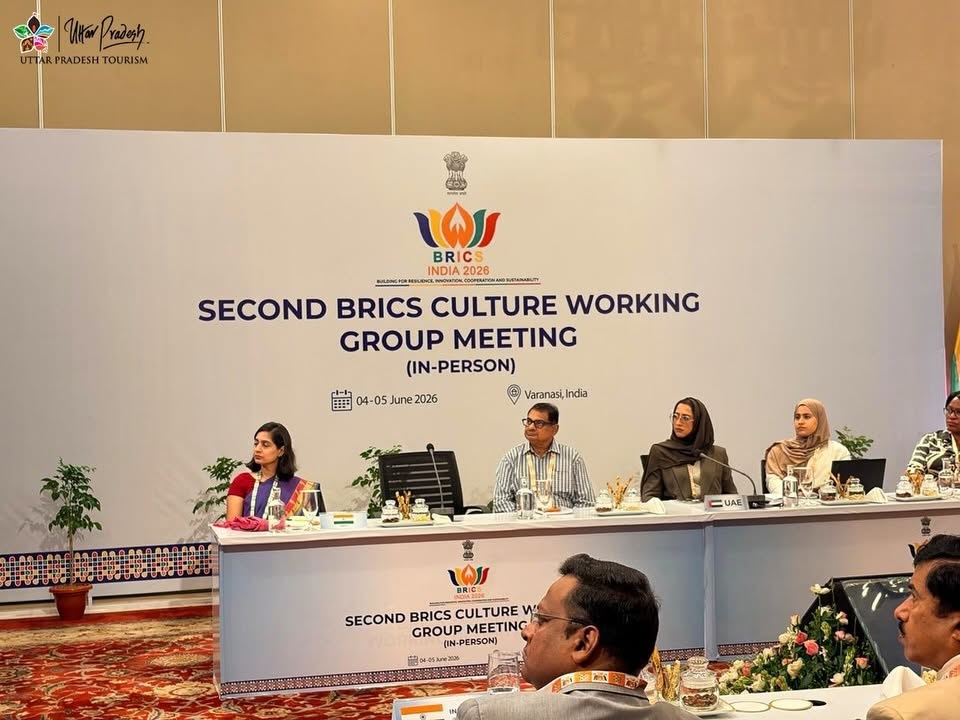
The ancient city of Varanasi, where civilisations have converged for millennia, provided the setting for a landmark moment in contemporary multilateral cultural engagement. The 2nd BRICS Culture Working Group Meeting opened in the holy city on June 4, bringing together senior diplomats, cultural experts, and ministerial representatives from across the BRICS nations for two days of substantive dialogue on culture, heritage preservation, and international cooperation.
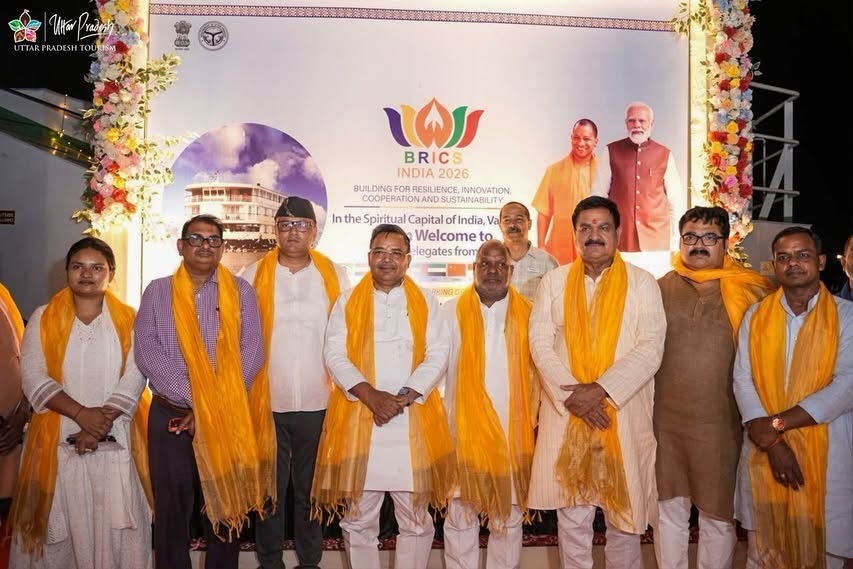
The inaugural session set a tone of purposeful engagement, drawing distinguished participants from India and abroad into conversations that carry genuine weight for the future of cultural collaboration among the world’s leading emerging economies. Dr. Ved Pati Misra, Director General of Uttar Pradesh Tourism, attended the opening session and interacted with the assembled dignitaries – his presence reflecting Uttar Pradesh’s active role in positioning its extraordinary cultural landscape at the centre of India’s diplomatic and cultural outreach.
If the discussions inside the meeting rooms defined the substance of the gathering, it was Varanasi itself that defined its spirit. Delegates from across the BRICS nations were taken on a cruise along the sacred ghats of the Ganga, where the city’s ancient skyline, its centuries-old temples, and the rhythmic cadence of daily life along the riverbank offered an experience that no formal presentation could replicate. The evening culminated in the Ganga Aarti-that great, luminous ceremony of fire, devotion, and sound that has been performed at the ghats of Kashi without interruption for thousands of years. For delegates encountering it for the first time, the impression was, by all accounts, profound and lasting.
The concluding engagements of the two-day meeting were held at Hotel Taj Ganges, where a state dinner and cultural evening brought the delegates together in an atmosphere of warmth and celebration. Mr. Jaiveer Singh, Minister of Tourism and Culture, Government of Uttar Pradesh, and Dr. Ved Pati Misra were both present, engaging personally with representatives from the visiting nations. The evening’s cultural performances, showcasing the depth and diversity of India’s classical and folk artistic traditions, drew appreciation from across the room and sent the delegates home carrying something more than policy discussions – they carried a felt sense of India’s living cultural heritage.
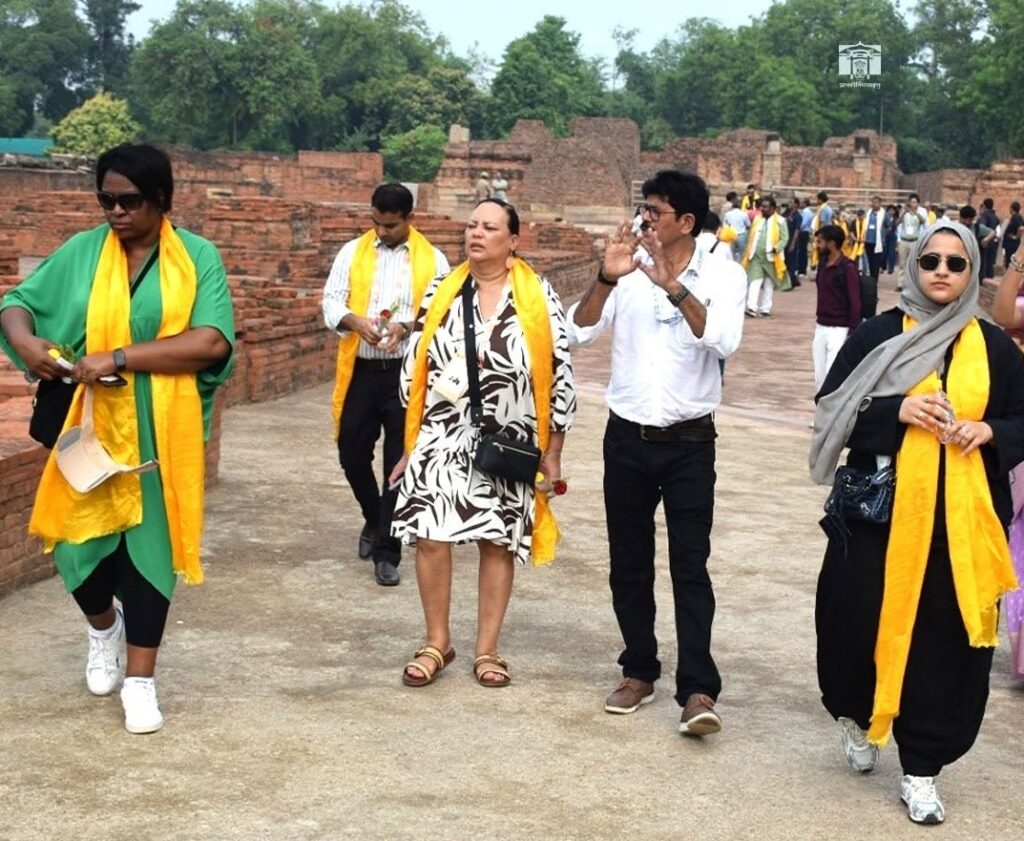
On the sidelines of the main meeting, a delegation visit to Sarnath added a layer of historical and philosophical depth that resonated powerfully with the gathering’s overarching themes. Sarnath – where the Buddha delivered his first sermon over 2,500 years ago and set in motion the spread of Dhamma across the known world – received the BRICS delegates with the quiet authority of a site that has witnessed the turning of history. The Archaeological Survey of India, which has been committed to preserving Sarnath’s remarkable cultural layers for over 150 years, guided the delegates through an encounter with more than two millennia of architectural and civilisational continuity. At the Interpretation Centre and one of India’s earliest archaeological site museums, the delegates came face to face with artefacts of extraordinary significance – among them the celebrated Lion Capital of Ashoka and the iconic Dharmachakrapravartana image of the Buddha, that great representation of the moment the wheel of Dhamma was first set in motion. The delegates expressed deep appreciation for the ASI’s sustained stewardship of this irreplaceable heritage.
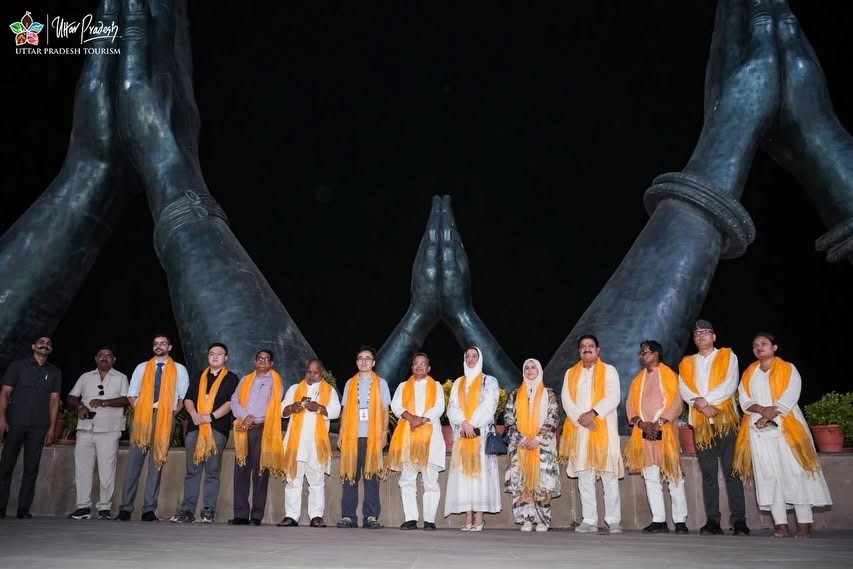
Speaking on the occasion, Tourism and Culture Minister Mr. Jaiveer Singh captured the meaning of the gathering in terms that reached beyond diplomacy. India, he noted, has always held the spirit of Sarve Bhavantu Sukhinah – may all beings be happy, may all be free from suffering – as the compass of its engagement with the world. That this meeting should be held in Kashi, the eternal city that has been India’s spiritual and cultural heartbeat since time immemorial, was not merely appropriate – it was a statement. A statement about what India offers to the world, about the depth of the heritage that Uttar Pradesh carries, and about the enduring truth that the most powerful diplomacy is not conducted in conference rooms but in the shared experience of beauty, history, and the human spirit.
For the delegates who walked the ghats, witnessed the Aarti, and stood before the Lion Capital at Sarnath, Varanasi did what it has always done – it left a mark that time does not easily erase.
Also Read
PATA Forecasts Tourism Growth to 2028
Watch on Youtube
Dato Sri Tiongking Sing, Tourism Minister of Malaysia at ATF 2025
