
The Museum Man the World Discovered – and India hasn’t Quite Called Yet
Somewhere between San Francisco’s fog-wrapped waterfront and the earthquake-scarred plains of Bhuj, between a dinosaur bone-bed in sub-zero Alberta and the coral-inspired curves of a wetland museum in Hong Kong, one name keeps turning up on the credits: Dr. George Jacob. In a career spanning more than three decades, this India-born museumologist has designed, conceptualised, or led the building of over 108 museums, aquariums, science centres, and heritage destinations across the United States, Canada, South Korea, Hong Kong, Norway, Malaysia, Jamaica, Egypt, and the UAE. It is, by any measure, one of the more remarkable global careers to have started in Kerala – and one that India, and Kerala in particular, has yet to properly put to use at home.
A Kerala Start, A Global Trajectory
Dr. Jacob was born into a family based in Changanserry in Central Kerala with deep roots in culture and media – his mother, Omana Jacob Ayroor, was a journalist and author of culinary books. The instinct for storytelling clearly ran in the blood, because his own career took off early and fast. By 25, he had become the world’s youngest Science Center and Planetarium Director, going on to serve as founding President & CEO of four museums, including the NASA-Ames-funded Astronomy and Cultural Heritage Center in Hawaii. He trained at the Smithsonian, and built his academic foundation across three continents – the Birla Institute of Technology & Science (BITS Pilani) in Rajasthan, the University of Toronto, and the Yale School of Management.
Today, based in Canada, Dr. Jacob serves as President and CEO of BayEcotarium in San Francisco – the largest non-profit conservation group in the city, overseeing seven institutions including the Aquarium of the Bay, The Bay Institute, Sea Lion Center, Studio Aqua, and the Bay Model with the US Army Corps of Engineers, all working under a unified mission to protect the Bay’s fragile ecosystems from the Sierra to the sea. Under his leadership, this AZA-accredited Smithsonian Affiliate – celebrating its 44th anniversary and having served millions of visitors over the years – is being transformed into a $260 million sustainable immersive ecotarium: the first of its kind Climate Resilience and Ocean Conservation Living Museum in the world, with an estimated $2 billion economic impact projected for California tourism. The unveiling of this vision was significant enough to draw a keynote from Dr. Jill Biden, then First Lady of the United States.
He also sits on the boards of the International Council of Museums US, the Commonwealth Association of Museums, the California Travel Association, and US Travel, and mentors at UC Berkeley’s Haas School of Management – a vantage point that gives him an unusually wide view of how destinations, large and small, actually get built.
A Portfolio That Reads Like a World Atlas
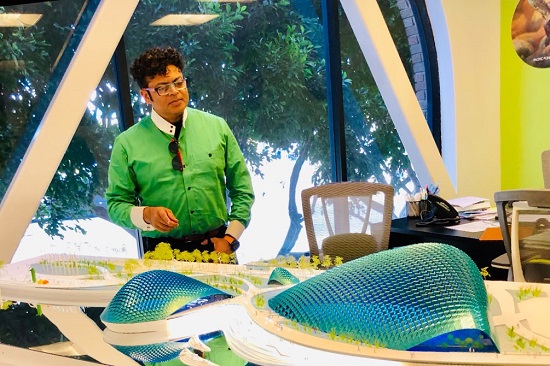
What sets Dr. Jacob apart is not just the number of museums to his name, but their range – in geography, in scale, and in subject. His design philosophy consistently pairs cutting-edge technology and eco-friendly architecture with deeply immersive storytelling, and it shows across a portfolio that includes:
Smritivan Earthquake Memorial & Museum, Bhuj, Gujarat – a 115-acre memorial to the victims of the 2001 earthquake, with dynamic, earthquake-inspired architecture and extensive titanium cladding to withstand the elements without rusting
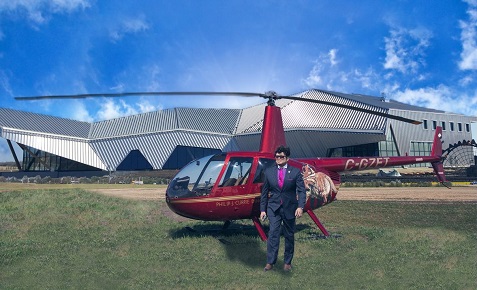
Philip J. Currie Dinosaur Museum, Alberta, Canada – built on unstable ground that plunges to –38°C in winter, showcasing 60-million-year-old fossils with 3D CT-scanner technology that renders dinosaurs on demand; delivered as the fastest museum design-build project in North America, winning nine awards in nine months
Jamaica Oceanarium, Montego Bay – a 2.4-million-sq.-ft. complex conceived to house over 30,000 marine species
Oceanarium Norway, Bergen, and the Hong Kong Wetland Park, its design drawing inspiration from sea urchins and coral
Virasat-e-Khalsa Museum, Anandpur Sahib, and B.M. Birla Science & Planetarium Complex, Jaipur – both under his founding presidency
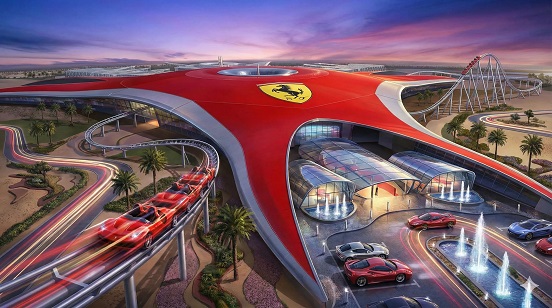
Imiloa Astronomy Center, University of Hawai’i; Ferrari World, Abu Dhabi; Scientific Exploration City, Egypt; Saint Louis Science Center; Connecticut Science Center; and a string of American nature and heritage institutions – the Alaska Islands and Ocean Visitor Center, River Bend Nature Center in Texas, Grand Teton National Park Visitor Center, Audubon Insectarium in New Orleans, Tillamook Forest Center in Oregon, and the Whiting Forest canopy walk at Dow Gardens, Michigan
Closer to Washington’s national memory, he served as Project Director for the permanent Star-Spangled Banner exhibit at the Smithsonian’s National Museum of American History – rededicated to the nation by President George W. Bush – and has also worked on the National Marine Corps Museum, the Reagan Public Library’s Air Force One exhibit, and the National Purple Heart Hall of Honor
Back in India, his footprint also includes the Kagzipura Paper Museum in Aurangabad, preserving a papermaking heritage dating to the era of Muhammad bin Tughluq, and the Mathematics Museum, Chandigarh, tracing India’s mathematical lineage back to Aryabhata
Beyond the Buildings
Dr. Jacob’s influence extends well past architecture and exhibit design. He has authored more than a dozen books on the future of museums – among them Museum Design, Exhibit Design, Cultural Leadership, Museum Practice, and the Museum Futures series, which includes Gen Alpha, Corona Conundrum (released during the pandemic, and winner of the 2021 California Travel Association Award for Sustainable Tourism), and Climate Curatorship – alongside 150-plus opinion editorials for newspapers, publications, and television networks on sustainable tourism, museum design, and heritage advocacy.
His environmental advocacy runs equally deep. In 2019, he was appointed Chief Advisor on Museums to the UN Environment Programme for Climate and Ocean Conservation initiatives in the Caribbean, later serving as a designee for the UNFCCC and UNCCD. That same environmental commitment has taken an unusual cultural form: in 2019 he organised the first-ever Climate Concert in Niagara with members of the legendary rock band The Police, and in 2023 he staged the first Climate Concert for the United Nations COP28 at the Dubai Opera with the same band, drawing representatives from 170 nations.
The honours have followed accordingly – the Royal Canadian Geographical Society’s Louie Kamookak Medal for Lifetime Achievement (2019), making him only the fifth person outside Canada to receive it, after Sir David Attenborough, Sir Michael Palin, Alex Trebek, and President Jimmy Carter; the Queen Elizabeth II Diamond Jubilee Medal (2012) and the Late Queen Elizabeth II Platinum Jubilee Medal (2022); California’s first Environmental Secretary’s Award for Excellence in Sustainability; two Global Future Design Awards (2021–22), including an APR Global Future Design Award win for the BayEcotarium concept; the 2023 SEAL Award; and, in 2024, recognition as a BITS Pilani Distinguished Alumnus.
In His Own Words: It’s Not the Destination – It’s the Ecosystem
In a recent conversation with Tourism India, Dr. Jacob turned his global vantage point toward a question every Indian state tourism department is currently wrestling with: what does it actually take to turn heritage into a destination people fly across the world to see?
His central argument is one that applies as much to Rajasthan or Assam as it does to Kerala. “It is not enough to simply create destinations,” he said. “It is the connective tissue, the ecosystem that accelerates ease of access to a wide demographic all year round.” Accessibility, in his framing, is the foundation everything else sits on – “from Railways, Roads to Flight Connectivity” – but it doesn’t stop at getting a visitor into the state. It extends to what happens once they’ve arrived: “current information is key to enable informed choices for stay, travel within, dining and amenities like clean washrooms and locker rooms for backpackers and pedestrians.”
He is equally direct about where India’s tourism infrastructure tends to fall short in the details. Trains remain economical, he notes, but there’s real room to improve infrastructure across both high- and mid-income traveller segments. “Highway signs with color-coded heritage sites, attractions, destinations and accurate updated websites are as important as helplines, complaint desks and swift resolution of safety and medical emergencies,” he said – adding a detail that will resonate with any state courting international visitors: “Many tourists are not familiar with QR codes and UPI payment methods and often carry cash that poses new problems, even at airports.”
Three Fixes Any State Could Start On Tomorrow
Asked to name the areas needing the most urgent attention, Dr. Jacob pointed to three issues that show up, in one form or another, wherever India’s water bodies, roads, and wildlife tourism intersect with unregulated growth.
First: ageing tourist vessels and inadequate docking infrastructure – a problem visible anywhere boat tourism has scaled faster than the standards meant to govern it. “Run down old vessels must be decommissioned unless brought up to standards,” he said.
Second: the access roads feeding thousands of resorts, homestays, and independent stays across the country, which he links directly to a downstream environmental cost. “All arterial connective roads must be brought to standards in conjunction with penalizing those who heap plastic waste by the wayside,” he said – noting this is tied to “polluted water ways, that impacts marine health which is borderline toxic with levels of mercury, domoic acid, PCB pollutants and the like.”
Third, and perhaps most pressing for any state building its brand on wildlife tourism: animal welfare. “There is a greater need to be humane and safe,” he said of elephant rides and similar wildlife-based tourist experiences – a caution any state marketing elephants, camels, or other animals as part of its tourism draw would do well to take seriously.
What India’s States Are Sitting On
Dr. Jacob’s larger point is that India’s states are, almost without exception, underselling what they already have. The country’s maritime history alone – trade routes that connected Kerala’s spice coast to world cultures for millennia, but with parallels along nearly every Indian coastline – remains, in his words, something “much needs to be shared with the world,” in terms of the “wider socio-economic and faith based influences” that history carried across centuries. The same is true of India’s living heritage more broadly: its architecture, cuisine, festivals, and craft traditions, layered across every state, offer exactly the kind of “interwoven tapestry” that a single beach photo or festival highlight reel rarely captures.
Two Notes from Home: Kerala’s Opening
Closer to his own roots, Dr. Jacob singled out two developments in Kerala worth watching closely – not as a Kerala story alone, but as a model other states might study. The first is the Muziris Heritage Project, which he calls a genuine success in translating archaeological and maritime history into a living visitor experience. The second is more recent: Kerala’s move to develop a Maritime Heritage Museum complex with an Oceanarium, backed by a seed capital of Rs. 50 crore already committed by the state. “It is commendable that CM V.D. Satheesan has taken the initiative to re-think the possibilities of eco-tourism and impactful sustainability,” Dr. Jacob said, recalling a roundtable discussion on the initiative that he attended during a recent visit to India. For him, the appeal of an Oceanarium goes beyond spectacle – it’s a way of “balancing heritage with living heritage,” intertwined with the coastal economy that sustains millions of livelihoods. “Understanding the ocean ecosystem,” he added, “is the first step towards appreciating the incredible marine biodiversity at our doorstep.”
Despite this engagement, Dr. Jacob’s ties to Kerala remain more personal than professional. He returns during holidays, and by his own account, carries a clear-eyed sense of what the state is sitting on. “Building shopping malls isn’t the core requirement for development; preserving our roots is what matters,” he has said. “Kerala has a rich, rare heritage that deserves a world-class, visionary master plan.” He has expressed a genuine willingness to help draft a comprehensive museum blueprint for his home state – an offer that, so far, has gone largely untaken.
A Question for Every State Capital
What makes Dr. Jacob’s perspective worth taking seriously isn’t just the résumé – it’s that he has already answered, in built form, the exact question most Indian states are now asking on paper: how do you turn heritage into an experience that competes globally? Bhuj has its answer in the Smritivan Earthquake Memorial. Alberta has its answer in a dinosaur museum built on frozen, unstable ground. San Francisco is building its answer into a $260-million living museum on the bay. India’s states, Kerala included, have the raw material – the coastlines, the trade history, the craft and culinary traditions, the wildlife – to write their own answers. What Dr. Jacob’s career suggests, again and again, is that the missing ingredient usually isn’t heritage. It’s the masterplan, the ecosystem, and someone willing to build the connective tissue between them.
Dr. George Jacob has spent three decades proving, on five continents, that a museum can be more than a building that houses the past – it can be a reason travellers choose a destination in the first place. The question India’s states might now ask is a simple one: why does it take a first lady’s keynote in San Francisco to notice what has been available, all along, back home?
Also Read
ITB India 2026 Concludes in Mumbai
Watch on Youtube
