
For nearly four decades, the Somatheeram Ayurveda Group’s story has been written along Kerala’s coastline – in beachfront retreats built around the science of Ayurveda and a loyal following of European and international wellness travellers. That story now finds a new chapter. The Group has announced the opening of Soma Seven Springs Resort, Munnar, its first hill-station leisure property and a distinct departure in setting, if not in philosophy, from the beach resorts that built its reputation.
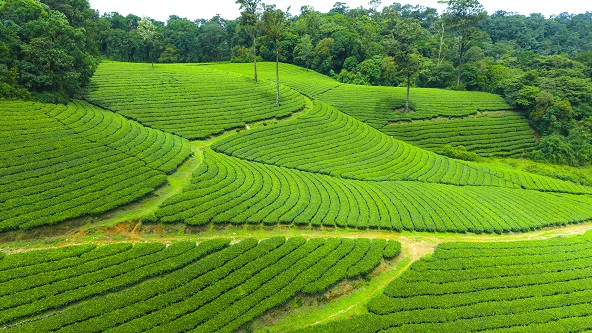
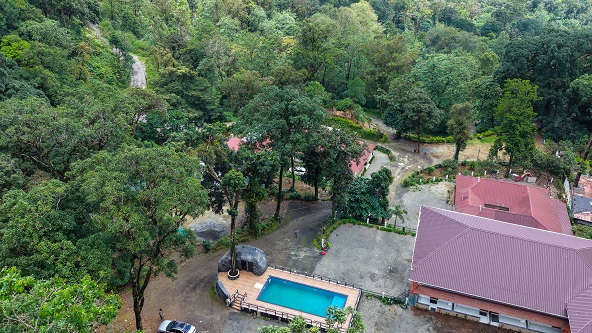
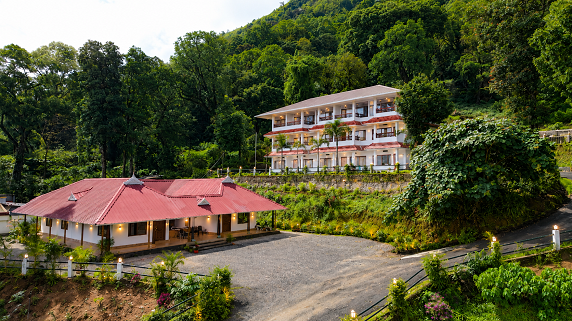
Set within the 100-acre Letchmi Estate along the elevated ridge toward Mankulam, roughly 10 km from Munnar town, the resort unfolds across plantations of tea, coffee, and cardamom, framed by the mist and cool air characteristic of this stretch of the Western Ghats. It is, in every sense, a property built for altitude – a contrast to the sea-level calm that has defined Somatheeram’s earlier properties, but built on the same founding belief: luxury that stays rooted in nature rather than apart from it.
Speaking on the launch, Mr. Baby Mathew, Founder & CMD, Somatheeram Ayurveda Group, framed the move as a response to a shift he is watching unfold across Kerala’s inbound tourism. “For four decades, our story has been written on the coast – in Ayurveda retreats built for European and discerning global travellers who came to us for the sea, the silence, and the science of healing,” he said. “Soma Seven Springs is our first step into the hills, and it comes at exactly the right moment. Kerala’s inbound traffic is changing fast, and we are seeing something we did not expect even a few years ago: Arab travellers, traditionally drawn to our beaches and backwaters, are now actively seeking hill-station destinations for luxury and wellness. Munnar gives us the altitude, the climate, and the landscape to bring our philosophy of nature-rooted luxury to an entirely new setting – and to a traveller segment we believe will define Kerala’s next decade of tourism growth.”
Twenty-Six Rooms, Five Ways to Stay
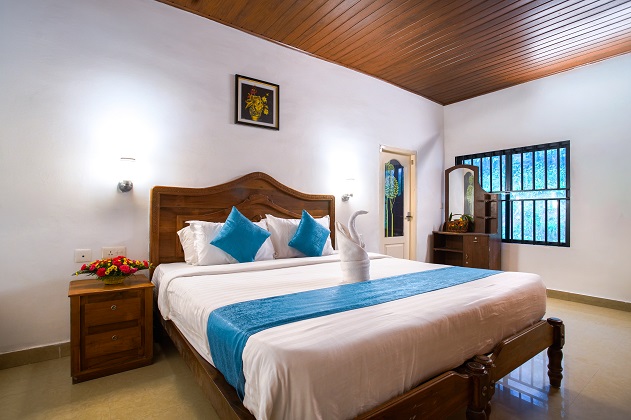
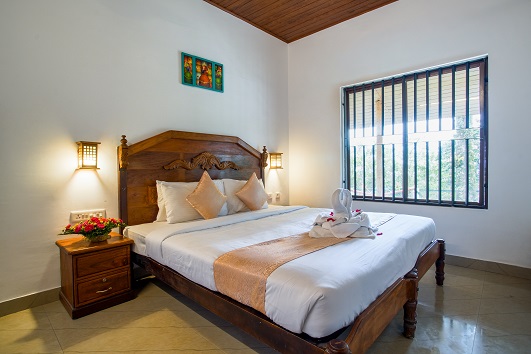
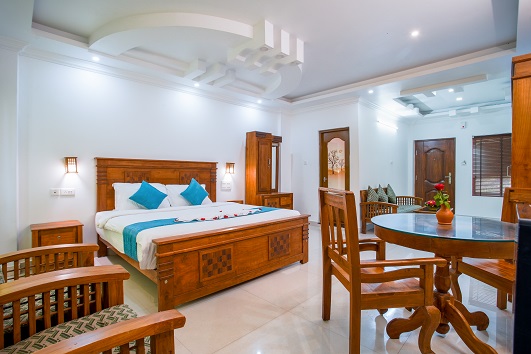
The resort’s 26 accommodations are spread across five distinct categories, each built to draw guests closer to the plantation landscape around them. The standout is the Luxury Tree House – a single unit built 30 feet above the ground within a patch of Shola forest, reached by secure staircases and fitted with the comforts of a conventional room despite its perch in the canopy. It sits alongside ten Deluxe Hill View rooms with private balconies and dedicated living spaces looking out over the ridgeline, five Deluxe Garden View rooms framed by forest and garden views, and two categories drawing on Kerala’s architectural heritage – six Nalukettu rooms and four Tharavadu rooms, both named for traditional Kerala homestead forms and designed to evoke the same sense of warmth and belonging.
Built Around the Estate, Not Just On It
What distinguishes Soma Seven Springs from a conventional hill resort is how deliberately its experiences are tied to the estate itself. Guided walks through the plantations double as an introduction to how tea, coffee, and cardamom are grown and processed, while the property’s Shola forest trails – home to more than 250 native tree species – open up to guests keen on more active exploration. Birdwatchers have particular reason to take note: the estate records over 50 species, including the Malabar Whistling Thrush and the Indian Paradise Flycatcher, both prized sightings for serious birders.
Dining follows the same instinct, with the resort’s multicuisine restaurant drawing on fresh, locally sourced ingredients to serve Kerala specialities alongside Indian, Chinese, and Continental fare – a menu built for a hill-station climate rather than adapted from a coastal one.
Beyond the estate boundary, the surrounding landscape offers a fuller Munnar itinerary within easy reach – a scenic river viewpoint 3.5 km away, the Tiger Cave and Hanging Bridge along with the Nakshathrakuthu Waterfall trek at 5 km, the Mankulam Adventure Zipline at 7 km, Munnar’s tea and spice markets at 9 km, and Eravikulam National Park, home to the Nilgiri Tahr, at 20 km. For those willing to travel a little further, Chinnar Wildlife Sanctuary and its ancient megalithic dolmens lie roughly 50 km out.
A Bet on Where Kerala Tourism Is Headed
The timing of the launch is not incidental. As Mr. Mathew notes, Kerala’s Arab-market travellers – long associated with the state’s beaches and backwaters – are increasingly showing interest in hill-station wellness, a shift that puts pressure on Kerala’s leisure hospitality sector to diversify beyond its traditional coastal strongholds. Somatheeram’s decision to bring its Ayurveda-honed hospitality model to Munnar positions Soma Seven Springs as an early, deliberate bet on that changing demand – one that pairs a well-established wellness brand with a destination increasingly in demand among the very travellers the Group is best known for serving.
With its plantation setting, forest-canopy accommodation, and a dining and experience program built specifically for its altitude, Soma Seven Springs Resort marks not just a new address for Somatheeram Ayurveda Group, but a signal of where the Group – and, perhaps, Kerala’s wider hospitality sector – sees its next phase of growth taking shape.
Also Read
ITB India 2026 Concludes in Mumbai
Watch on Youtube
