
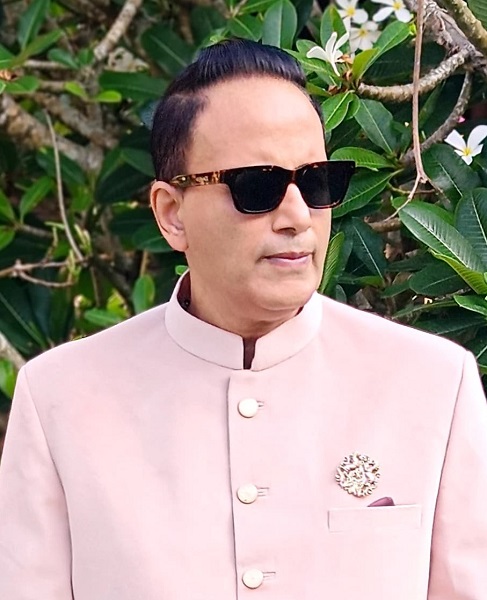
By Mr. Rajagopaal Ier | CEO, UDS Hotels & Resorts
There is a question I often ask myself when I walk through the lobby of a hotel: what, precisely, are we in the business of providing? The answer has changed more in the last decade than in the preceding two millennia. Hospitality is one of the oldest human institutions – and it is currently undergoing the most radical reinvention in its history. Understanding where we have come from is, I believe, the only sound basis from which to understand where we must go.
As someone who has spent the better part of three decades in this industry – watching it absorb the shocks of globalisation, digitisation, a global pandemic, and now the arrival of artificial intelligence – I want to offer not merely a recounting of hospitality’s history, but an honest assessment of what it means for those of us who lead hotels and resorts in India today.
I. The Ancient Compact: Hospitality as Moral Obligation
The word ‘hospitality’ derives from the Latin hospes – meaning both host and guest, a linguistic duality that captures something essential about the relationship. Before it became an industry, hospitality was a civilisational norm. In Mesopotamia and Ancient Egypt, the obligation to shelter and feed a stranger was a religious and social imperative. The earliest recorded taverns date to 1700 BCE in Mesopotamia; cave paintings in France from 15,000 BCE suggest that even our prehistoric ancestors understood the idea of communal shelter.
In Ancient Greece, xenia – the sacred law of hospitality – governed the relationship between host and guest, protected by Zeus himself. A traveller who arrived at your door was to be fed, bathed, and housed before questions of identity were even asked. This was not sentiment; it was survival logic in a world without infrastructure. What is remarkable is that this same spirit – the anticipation of a guest’s needs, the offering of comfort without condition – remains the philosophical foundation of the finest hospitality in the world today.
Before hospitality was an industry, it was a civilisational compact. That spirit – the anticipation of need, the offering of comfort – is still the finest thing we do.
The formalisation of hospitality into a structured trade began in the medieval period, when monasteries across Europe provided lodging for pilgrims and travellers along established routes. The ‘hospitium’ – from which our word ‘hospital’ also derives – was the designated room of rest. Commerce had not yet entered the picture, but the architecture of care had.
II. The Grand Hotel Era: When Service Became an Art Form
The 18th century’s Grand Tour transformed hospitality from a moral duty into an aspirational experience. Wealthy European aristocrats, travelling through France, Italy, and Switzerland in pursuit of culture and refinement, created the demand for structured, sophisticated accommodation. The traditional inn evolved into the posting house, and eventually into the coaching inn – establishments that could accommodate horses, staff, and luggage as much as the guest themselves.
The Industrial Revolution was hospitality’s first great disruption. The railway arrived not merely as a mode of transport but as a democratising force: for the first time, the middle class could travel. The response was the modern hotel. In 1829, the Tremont House in Boston became a landmark – not because of its grandeur, but because of its innovations: indoor plumbing, individual room keys, and dedicated bellboys. These were not luxuries. They were radical statements about the dignity and privacy of the guest.
Then came Cesar Ritz and Auguste Escoffier – a partnership that, in the late 19th century, redefined luxury hospitality for the next hundred years. Ritz understood that the wealthy did not simply want accommodation; they wanted a world curated entirely around their comfort and self-image. Escoffier understood that dining was not refuelling – it was theatre, ceremony, and identity. Together, they established the template that still governs what we consider ‘five-star’ hospitality: impeccable service, culinary excellence, and the cultivation of a guest’s sense of being exceptional.
Ritz and Escoffier established a truth that still holds: the finest guests do not want service. They want the sensation of being exceptional – and we are in the business of producing that sensation, consistently, at scale.
III. The Age of Chains: Standardisation and the Global Guest
The mid-20th century brought hospitality’s second great disruption: the rise of the branded hotel chain. Post-World War II prosperity, the growth of commercial aviation, and the emergence of the modern corporation created an entirely new type of traveller – the business guest. Hilton, Marriott, Holiday Inn, and Sheraton understood this guest intimately. He (and it was almost always he) did not want to be surprised. He wanted the same bed, the same soap, the same level of service, whether he was in New York, London, or Tokyo.
This was the era of standardisation – and it was a triumph of systems thinking. The ‘brand promise’ became the hospitality industry’s most powerful asset. A guest who had stayed at a Marriott in one city carried an expectation into the next; the chain’s value proposition rested entirely on honouring that expectation, without exception, at scale. For India, this era arrived with particular force in the 1980s and 1990s, as chains like the Taj, Oberoi, and ITC Hotels developed their own versions of standardised luxury – rooted not in international homogeneity, but in a distinctly Indian idiom of service, heritage, and craft.
The motel, too, was a distinctly American invention of this era – born of the post-war love affair with the automobile. As highways extended across continents, the ‘Motor Hotel’ followed, offering affordable, convenient accommodation to the mobile family. In India, the dhaba and the highway rest house served a parallel function – simpler in form, but no less essential to the mobile traveller.
IV. The Digital Rupture: Power Shifts to the Consumer
The arrival of the internet did not simply change how hotels were booked – it fundamentally altered the power relationship between hotelier and guest. The Online Travel Agency (OTA) – led by platforms such as Expedia and Booking.com – placed inventory aggregation, price comparison, and guest reviews entirely in the hands of the consumer. A guest could, for the first time, assess a hotel’s reputation not through brand marketing but through the unfiltered testimony of thousands of previous visitors.
For hoteliers, this was a seismic shift. Reputation became visible in real time. Pricing became transparent and competitive to an unprecedented degree. The OTA commission – typically between 15% and 25% of booking value – became a structural cost that reshaped hotel economics globally. The industry’s response has been twofold: investment in direct booking channels and a renewed focus on the experiential qualities that no aggregator platform can commoditise.
The sharing economy’s arrival through Airbnb in 2008 was a further disruption – and, in retrospect, a clarifying one. Airbnb did not merely offer cheaper accommodation; it offered a different philosophy. Authenticity. Local character. The lived experience of a neighbourhood rather than the curated distance of a hotel. The hospitality industry’s response – the growth of boutique hotels, experience-led properties, and the ‘soft brand’ segment – was, at its best, a genuine reckoning with what guests actually want that brands alone cannot provide.
Airbnb did not defeat the hotel industry – it educated it. The guest was telling us something we had forgotten: that authenticity and local character cannot be standardised, and that this is precisely their value.
Mobile technology completed this transformation. Keyless room entry, mobile check-in, app-based concierge services, and real-time personalisation all began to dissolve the traditional ‘front desk friction’ of the arrival experience. In parallel, the explosion of social media meant that every stay – extraordinary or disappointing – had the potential to reach thousands of prospective guests within hours of checkout.
V. The 2025 Horizon: Agentic AI, Regeneration, and the Sentient Hotel
We are now at the threshold of hospitality’s most profound transformation yet. The convergence of artificial intelligence, advanced biometrics, precision nutrition science, and a genuine global reckoning with environmental sustainability is reshaping not merely how hotels operate, but what a hotel fundamentally is.
The most significant shift is in the nature of service itself. Traditional hospitality has always been reactive – a guest calls the front desk, a request is received, a response is dispatched. The new paradigm is anticipatory. Agentic AI systems, drawing on a guest’s historical preferences, health data, ambient sensor readings, and real-time behavioural signals, can identify and meet needs before the guest has consciously articulated them. A room temperature adjusted before arrival. A preferred morning beverage prepared without request. A restaurant reservation made because the system detected a pattern in the guest’s calendar and dietary history.
The wellness dimension of contemporary hospitality deserves particular attention. The hotel of the 2020s is no longer simply a place to sleep between engagements – it is increasingly a ‘longevity centre,’ offering bio-hacking protocols, sleep-optimised room environments, circadian lighting systems, mental health retreats, and medically supervised wellness programmes. In India, this evolution carries a particular resonance, given our millennia-long tradition of Ayurveda and holistic wellness. The integration of Ayurvedic diagnostics with modern personalisation technology – offering guests a protocol genuinely calibrated to their constitution, metabolism, and health history – is an area in which Indian hospitality has a genuine competitive advantage on the global stage.
The sustainability transition is equally profound – and, I would argue, more urgent. The industry’s conversation has shifted from ‘sustainability’ (the aspiration to do no further harm) to ‘regeneration’ (the commitment to leave a destination measurably better than we found it). Energy-positive hotels – properties that generate more power than they consume through solar, wind, and energy recovery systems – are moving from aspiration to operational reality. Water positivity, waste elimination, and biodiversity restoration are following. For hoteliers in India, where environmental pressures are acute and guests are increasingly conscious of ecological impact, regenerative hospitality is not a marketing proposition – it is a strategic imperative.
The finest hospitality in the years ahead will be measured not only by guest satisfaction scores, but by the condition in which it leaves the landscape, the community, and the culture it inhabits.
VI. What This Means for Indian Hospitality
India’s hospitality sector stands at a crossroads that is, in many ways, more interesting than that facing any other market in the world. We have a domestic travel market of extraordinary scale and growing sophistication. We have a wellness heritage – Ayurveda, yoga, traditional culinary systems – that the world is actively seeking. We have landscapes and cultural experiences of unmatched diversity. And we have a hospitality workforce whose instinct for warmth and service is, in my experience, second to none globally.
What we must now build is the infrastructure of intelligence around that instinct. The technological capabilities that allow anticipatory service, frictionless arrival, and personalised wellbeing are not foreign impositions on Indian hospitality – they are tools that can amplify precisely what we are already best at. An AI that knows a returning guest prefers a south-facing room, a particular type of pillow, and a specific regional breakfast is not replacing the warmth of our hospitality – it is giving our people the information they need to deliver it with greater precision and less effort.
The challenge – and I say this from the perspective of someone who has navigated this transition – is cultural as much as operational. Investing in technology while retaining the soul of service. Embracing standardisation where it adds efficiency, while protecting the distinctiveness that no algorithm can replicate. Training a workforce for an era in which the routine is automated but the exceptional remains irreducibly human.
The independent and boutique hotel sector in India, in particular, has an opportunity to lead in this space. We are not burdened by the legacy systems and brand homogeneity of the large chains. We can be nimble. We can experiment. We can offer the authenticity that the global traveller is seeking, powered by the intelligence that modern technology now places within reach.
The Constant Within the Change
From the cave shelter of prehistory to the agentic AI-powered resort of 2025, one thing has remained constant in hospitality: the desire of the guest to feel genuinely seen, genuinely welcomed, and genuinely cared for. Every technology, every business model, every architectural revolution in this industry has ultimately been in service of that singular aspiration.
The tools available to us today are more powerful than anything our predecessors could have imagined. The data is richer, the capabilities more precise, the reach more global. But the standard by which our guests will judge us has not changed since a traveller first knocked on the door of a Mesopotamian tavern five thousand years ago: did you make me feel at home?
That question is the beginning and the end of our industry. Everything else is method.
(Mr. Rajagopaal Ier is the Chief Executive Officer of UDS Hotels & Resorts. With nearly three decades of leadership experience across the Indian hospitality sector, he is a recognised voice on the intersection of technology, sustainability, and service in the evolving hospitality landscape. He writes in a personal capacity)
Also Read
Travel & Tourism Emerges as the World’s Fastest Growing Sector
Watch on Youtube