
By Tourism India Editorial Team
In an era where cities are becoming simultaneously more connected and more congested, more prosperous yet less livable, few voices offer the clarity and cross-disciplinary insight of Prathima Manohar. As Chair of The Urban Vision and Director of GoodPass and Paradise Holidays, she operates at the fascinating intersection of architecture, urban policy, tourism innovation, and community empowerment – redefining how we experience cities and why “made in local” movements are critical to their future.
A Journey Shaped by Cities
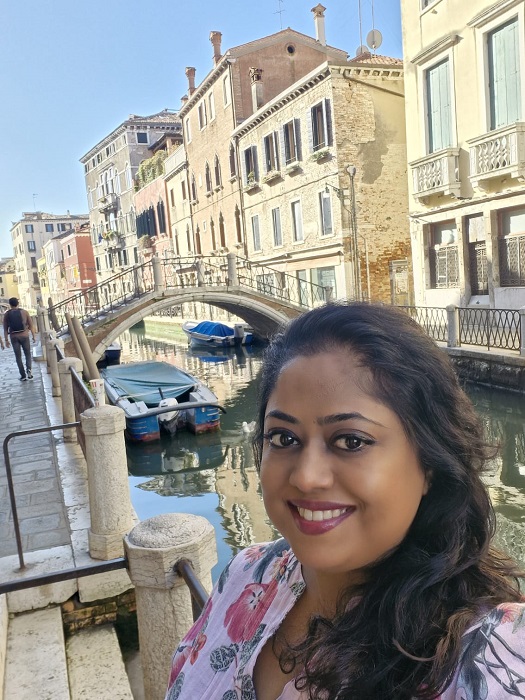
Prathima’s evolution from architect to urban innovator, entrepreneur, and media voice wasn’t driven by a single epiphany but by a persistent contradiction she witnessed firsthand in her hometown of Bangalore. “I have always loved big cities,” she reflects. “More than any institution or person, they have been my greatest influence.” Yet as Bangalore transformed into a global technology hub, she observed that economic growth and iconic buildings weren’t translating into safer streets, healthier communities, or dignified livelihoods. “Bangalore’s transformation while becoming steadily less livable made this contradiction impossible to ignore.”
This realization propelled her beyond the confines of architectural practice. Trained as an architect and armed with prestigious fellowships from Stanford University’s Centre of Democracy Development & Rule of Law and Harvard Kennedy School’s Ash Center, she recognized that cities aren’t disciplinary problems -they’re systems problems requiring integrated solutions across urban policy, tourism, media, and entrepreneurship.
Her architectural training, however, remains foundational to her thinking. “Architecture trained me to think spatially, systemically, and across time,” she explains. “I see tourism and placemaking as extensions of urbanism: where culture, movement, public life, memory, and the economy intersect.” For Prathima, experience design isn’t about spectacle but about the sequencing of everyday life -how people arrive, move, meet, rest, and belong. “It is the street where community life unfolds, rather than the building, that remains the fundamental unit of the city.”
Cities as Living Experiences
What distinguishes Prathima’s approach is her insistence that cities should be experiential rather than merely visually impressive. “An experiential city allows participation rather than passive consumption,” she asserts. “Markets, streets, public squares, and neighborhoods matter more than monuments. People remember how a city felt – whether it was walkable, safe, sociable, and humane – not how photogenic it was.”
This philosophy extends to her perspective on authenticity in the Instagram age. Rather than resisting visibility, she advocates for shaping who benefits from it. “When local communities are economic stakeholders rather than visual backdrops, culture remains lived rather than performed,” she notes. “Digital platforms should amplify local creators, food systems, crafts, and cultural practices without flattening them into interchangeable content. The real risk is not exposure, but extraction without reciprocity.”
Her commitment to participatory urbanism reflects this belief in distributed governance. “When residents co-create public spaces and experiences, cities become more inclusive and resilient,” she emphasizes. “People protect what they help build. Participation is not cosmetic consultation; it is distributed governance.”
The Experience Economy and “Made in Local”

Looking ahead, Prathima sees tourism moving decisively from volume to value. “Experiences, authenticity, and cultural participation will matter more than hotels,” she predicts. “Destinations that invest in local entrepreneurs, public spaces, and cultural infrastructure will outperform those that chase footfall alone. The experience economy is fundamentally a livelihoods economy.”
Central to this vision is the “made in local” movement, which she considers critical for economic and cultural reasons. “Local culture, arts, and way of life are non-replicable economic capital,” she explains. “In a global market saturated with identical brands and formats, distinctiveness is the scarcest asset. ‘Made in local’ keeps value circulating within communities while preserving cultural integrity. Without it, destinations hollow out.”
This isn’t about rejecting global standards but ensuring they don’t dictate identity. “Standards should ensure safety, access, and fairness -not dictate identity,” she clarifies. “The mistake many destinations make is importing narratives alongside infrastructure. Global access must coexist with local authorship. Culture cannot be franchised.”
GoodPass: Bridging the Last Mile

This philosophy found practical expression in GoodPass, an enterprise-AI platform addressing a structural gap in travel. “While flights, hotels, and payments are highly digitized, local experiences -the food, culture, and everyday activities that actually define a trip – remain fragmented, invisible, and under-monetized,” Prathima observes. “Large platforms optimize for scale, not context, leaving hotels, airlines, fintechs, and destinations unable to offer meaningful local engagement.”
GoodPass was built to organize and distribute this last mile of travel, connecting global distribution with local creators while ensuring discovery, context, and fair economics. But Prathima is adamant about technology’s responsible use. “Technology should add context, not remove it,” she insists. “When platforms provide storytelling and equitable access, they deepen engagement. The danger lies in abstraction – reducing culture to inventory. Product design choices determine outcomes.”
She believes platforms can actively decongest tourism hotspots if intentionally designed to amplify neighborhoods, seasons, and lesser-known experiences. “Algorithms can either concentrate demand or distribute it. Responsible platforms do the latter by design, not accident.”
Tourism as Urban Policy
Prathima’s integrated thinking becomes especially clear when discussing tourism policy. “Tourism policy must be urban policy,” she states unequivocally. “When tourism competes with housing, strains infrastructure, or displaces communities, it undermines itself. Integrated planning of housing, mobility, public space, and livelihoods is essential. Tourism cannot be planned in isolation.”
The risks of tourism outpacing planning are severe: congestion, informal labor and ecology exploitation, loss of local character, and civic backlash. “These costs are often invisible until they become politically destabilizing,” she warns. “Once social trust erodes, recovery is slow.”
Her solution involves structured public-private-community partnerships. “Governments should enable rather than monopolize solutions,” she argues. “Private innovators and civil society bring agility; communities bring legitimacy. These partnerships are no longer optional; they are the only scalable model.”
Practice: From Coastal Hospitality to Rural Entrepreneurship

Prathima’s philosophy isn’t confined to policy papers and platforms. Along Karnataka’s coastal stretch, she runs a portfolio of leisure hospitality resorts that embody her principles. “They are rooted in local architecture, food systems, and employment,” she explains. “Luxury is defined as authenticity, not excess. The aim is to strengthen local economies rather than import detached consumption models. Hospitality, at its best, is place stewardship.”
These resorts, originally built by her parents who are deeply rooted in the region’s culture, were designed to showcase local architecture, food, and ways of life rather than import generic hospitality models.
She has also created an incubator for rural women micro-entrepreneurs, helping them transform their heritage, craft, and stories into community-driven tourism experiences. “The most significant shift is from invisibility to agency,” she reflects. “When women move from informal labor to ownership of skills, income, and narrative, it reshapes households and communities. These are small enterprises with outsized social returns.”
Can such community-driven tourism scale? “It should scale networks, not replicas,” she responds. “Local specificity must remain intact, but finance, technology, and policy support systems can scale horizontally. The mistake is confusing scale with uniformity.”
India’s Unique Advantage
Regarding India’s position globally, Prathima sees both challenges and opportunities. “India’s challenges mirror global ones-amplified by scale and speed,” she acknowledges. “What distinguishes India is its potential to leapfrog through digital public infrastructure and community-led models. The opportunity is systemic, not incremental.”
She believes in mutual learning: “India can learn from integrated governance and long-term planning. The world can learn from India’s frugal innovation, adaptability, informality, and social density. Innovation here often emerges from constraint.”
Are Indian destinations ready to be experience-led? “Yes, the demand is already there. What lags is policy alignment and platform design,” she responds. “India’s real advantage lies in its extraordinary cultural density: every fifty kilometers, the food, craft, language, and lived heritage change. In a world of mass-produced, interchangeable experiences – where a hotel in Dubai can feel identical to one in Gurgaon – this diversity is India’s greatest competitive advantage. We should build around this ‘made in local’ principle: recognizing, organizing, and elevating local creators, artisans, and cultural producers so Indian destinations can lead with experience rather than imitation.”
Leadership and Vision
When asked about essential leadership qualities, Prathima emphasizes “empathy to listen deeply, systems thinking to see the whole, and patience to build things that last.” She treats constraints as design inputs rather than obstacles. “Idealism provides direction, but policy, funding, and institutional realities determine pace and sequencing. Leadership, particularly in cities, is about converting long-term vision into incremental, defensible progress.”
Her advice to young professionals is practical yet idealistic: “Design for people, not magazines. Learn economics, policy, and storytelling alongside technical skills.”
And if there’s one idea every city leader should understand? “Cities are not products to be optimized; they are living contracts between people, place, and time. Break that contract, and no amount of growth will compensate.”
Prathima Manohar is Chair of The Urban Vision, a think-do tank focused on placemaking, participatory urbanism, and green cities, and Director of GoodPass and Paradise Holidays. A Stanford University Fellow at the Centre of Democracy Development & Rule of Law and Harvard Kennedy School Ash Center Fellow, she is a member of the World Economic Forum Future Council on Experience Economy. Her work has earned global recognition, including the Most Impactful Global Social Innovators award at World CSR Day (2017) and the Next Generation Architect award from iGen Design Forum (2016). A seasoned media voice, she has hosted shows on urbanism and design, with insights featured in The New York Times, The Wall Street Journal, and The Times of India. She has reported for France24 and TF1 and reviewed architecture for Architectural Record.
