
Destinations to Experiences: Maharashtra Unveils New Tourism Governance Visionwork
Maharashtra has taken a decisive step toward transforming its vast and diverse tourism potential into a globally competitive, professionally managed ecosystem. A high-level workshop on Destination Management Organisations, held on May 12, 2026, at Trident Hotel, Nariman Point, Mumbai, brought together the state’s senior government leadership, tourism industry stakeholders, hospitality representatives, district administrators, and policy experts to deliberate on a governance model that could fundamentally reshape how Maharashtra’s destinations are managed, branded, and experienced by visitors from across India and the world.
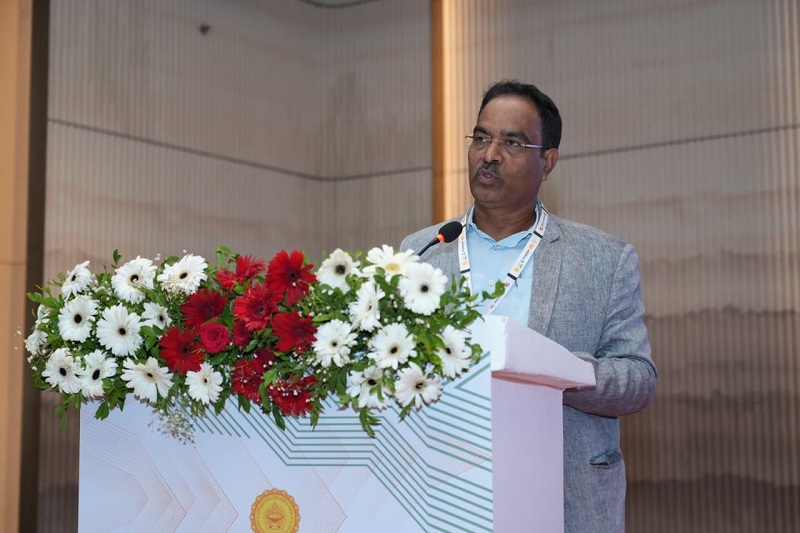
The workshop was organised under the MahaSTRIDE Operation – a World Bank-funded initiative implemented by Maharashtra Tourism, with the Maharashtra Institution for Transformation (MITRA) serving as the Programme Management Unit. Its convening under this framework signals that what is being built is not a temporary policy exercise but a structured, funded, and internationally benchmarked institutional transformation.
Deputy Chairmen of MITRA, Mr. Dilip Walse Patil and Mr. Rajesh Kshirsagar, was present at the session. Mr. Walse Patil articulated the ambition clearly: “Maharashtra has immense tourism potential rooted in its rich history, culture, spirituality, wildlife, coastal landscapes, and heritage destinations. Through Destination Management Organisations, the state aims to build a professionally managed and sustainable tourism ecosystem that enhances visitor experiences, strengthens stakeholder coordination, and positions Maharashtra as a globally competitive tourism destination.”
The workshop marked a key milestone under Disbursement Linked Indicator 3 of the MahaSTRIDE programme, which is focused on establishing and operationalising six Destination Management Organisations across Maharashtra. These DMOs are envisioned as institutional mechanisms that will drive integrated tourism development, strengthen destination-level coordination, enhance visitor experiences, and generate sustainable economic opportunities for local communities – moving tourism governance in Maharashtra from a promotional model to a management model, from marketing destinations to actively building and sustaining them.
At the heart of that shift is a recognition articulated powerfully by Shri Praveen Pardeshi, Chief Executive Officer of MITRA: “Maharashtra possesses extraordinary tourism potential, but to emerge as a truly global tourism destination, we must move beyond conventional promotion and adopt professional destination management practices. Destination Management Organisations can serve as dedicated institutions that integrate tourism services, local stakeholders, branding, infrastructure, logistics, and visitor experiences into a unified ecosystem.” The distinction he draws – between promotion and management – is the conceptual foundation on which the entire DMO framework rests.
A significant institutional development announced at the workshop was a Memorandum of Understanding between MITRA and the ATITHI Foundation to support knowledge-sharing, stakeholder engagement, and implementation partnerships within Maharashtra’s tourism ecosystem. The MoU represents the kind of public-private intellectual collaboration that serious destination management requires – bringing specialist expertise into the institutional architecture rather than keeping it at arm’s length.
The workshop’s centrepiece was a wide-ranging panel discussion on the role of DMOs and the unique proposition of Maharashtra – framed around the evocative tagline “You Will Find India Here.” The panel brought together Mr. Praveen Pardeshi, Mr. Sanjay Khandare, Mr. Neelesh R. Gatne, Mr. Aman Mittal, Project Director of MahaSTRIDE and Joint CEO of MITRA, Mr. Devendra Parulekar, Co-Founder of SaffronStays, and Mr. Wasim Shaikh, Chief Experience Officer of Active Experiences LLP, alongside other sector experts. The diversity of voices – from senior IAS officers to private sector innovators – reflected the genuinely cross-sectoral nature of the DMO model being proposed.
Mr. Sanjay Khandare, Additional Chief Secretary (Tourism), placed the DMO initiative within a broader strategic vision for the state’s tourism future: “By operationalising Destination Management Organisations, Maharashtra is taking a structured, future-oriented approach to tourism development. Our focus is not only on promoting destinations, but on creating sustainable, experience-driven tourism ecosystems that benefit local communities, generate employment, and enhance visitor experiences.” The emphasis on communities and employment alongside visitor experience is telling – it reflects an understanding that sustainable tourism governance must distribute its benefits widely if it is to endure.
The workshop was attended by Deputy Directors from all five of Maharashtra’s tourism divisions – Mrs. Pradnya Manohar from Konkan, Shri Bharat Langhi from Pune, Shri Vijay Jadhav from Chhatrapati Sambhajinagar, Shri Nandkumar Raut from Nashik, and Shri Prashant Sawai from Nagpur – ensuring that the framework being developed at the state level is informed by the realities and opportunities of each distinct region. Maharashtra’s tourism geography is extraordinarily diverse, and a DMO model that works for coastal Konkan must be equally relevant to the heritage circuits of Marathwada and the wildlife corridors of Vidarbha.
Mr. Neelesh R. Gatne, Managing Director of MTDC, captured the essential complexity of what modern destination management demands: “Tourism development today requires much more than infrastructure creation; it requires professional destination management, seamless visitor experiences, strong branding, and coordinated stakeholder participation. The DMO framework can help create structured, professionally managed destinations that strengthen local economies, improve tourism services, and enhance Maharashtra’s competitiveness in the global tourism market.”
The workshop has laid the foundation for what could be one of the most significant structural reforms in Maharashtra’s tourism governance in recent years. By bringing government institutions, private sector stakeholders, development partners, and tourism experts onto a single platform – and backing that convergence with World Bank funding and a clear implementation framework – Maharashtra is signalling that its ambition to become a globally competitive tourism destination is not rhetorical. It is institutional, funded, and underway.
Also Read
Vishnunadh Takes charge as Kerala’s Minister for Tourism and Culture
Watch on Youtube
